

Night Photography with Motion
Capturing movement after dark offers a unique way to create dynamic and visually striking images. Night photography with motion combines long exposures, creative lighting, and intentional blur to transform ordinary scenes into vibrant compositions full of energy and atmosphere. Whether you’re photographing city lights, fairgrounds, or moving vehicles, understanding how to control motion in low-light conditions can elevate your work and help you tell more compelling stories through your camera.
This guide explores practical techniques, recommended gear, and creative ideas for photographing movement at night. You’ll also find tips on exposure, focusing, and lighting, as well as answers to common questions about this exciting genre. For those interested in related topics, learning about the panning photography technique can further expand your skills in capturing motion.
Understanding Motion Effects in Nighttime Images
When photographing at night, longer shutter speeds are often necessary due to lower light levels. This opens up creative possibilities for capturing movement, such as light trails, motion blur, and dynamic backgrounds. The way you control your camera’s settings directly influences how motion appears in your photos.
- Light trails: Moving lights, such as car headlights or carnival rides, create streaks across the frame when using slow shutter speeds.
- Subject blur: People or objects in motion appear blurred, conveying a sense of speed or activity.
- Camera movement: Intentional camera movement during exposure can produce abstract effects and painterly looks.
Experimenting with these effects can help you develop your own style and approach to nighttime motion shots.
Essential Equipment for Nighttime Motion Shots
To achieve sharp, well-exposed images with creative motion effects, having the right gear makes a significant difference. Here’s what you’ll need:
- Tripod: Stabilizes your camera for long exposures, preventing unwanted blur from hand movement.
- Remote shutter release: Reduces camera shake when triggering the shutter.
- Wide-aperture lens: Allows more light to reach the sensor, making it easier to shoot in low light.
- Manual mode: Gives you full control over shutter speed, aperture, and ISO for precise exposure.
- Optional lighting: Portable LED panels or flashes can help illuminate subjects or add creative light sources. For more on lighting, see using LED lights in photography.
While specialized gear can help, you can start experimenting with any camera that allows manual control of exposure settings.
Camera Settings for Capturing Movement After Dark
Mastering the technical aspects of night photography with motion involves balancing exposure and motion blur. Here are the key settings to consider:
- Shutter speed: Slower speeds (1/10s to several seconds) create more pronounced motion blur. Faster speeds freeze action but may require higher ISO or wider apertures.
- Aperture: A wider aperture (lower f-number) lets in more light but reduces depth of field. Adjust as needed for your creative intent.
- ISO: Increase ISO to brighten your image, but be mindful of noise. Modern cameras handle higher ISO better, but test your limits.
- Manual focus: Autofocus can struggle in low light. Use manual focus or pre-focus on a well-lit area.
- White balance: Night scenes often have mixed lighting. Set white balance manually or shoot RAW to adjust later. For more on this, explore color temperature explained.
Start with a shutter speed of 1–2 seconds for light trails, then adjust based on the effect you want. Use a tripod to keep static elements sharp while allowing moving subjects to blur.
Creative Techniques for Dynamic Night Scenes
There are several ways to incorporate movement into your nighttime images. Here are some popular techniques:
Light Trails and Traffic
Photographing moving vehicles at night is a classic way to capture vibrant light trails. Position your camera on a tripod overlooking a busy street, set a slow shutter speed (2–10 seconds), and let the headlights and taillights paint lines across the frame. Adjust your exposure to avoid overexposing the brightest lights.
Fairgrounds and Amusement Rides
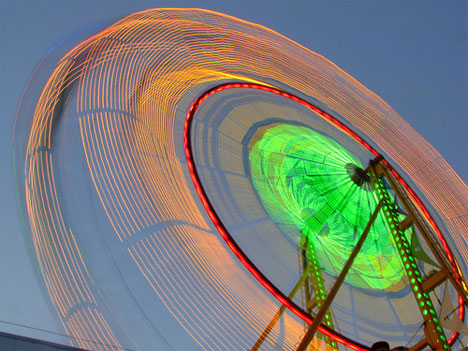
Brightly lit rides offer a fantastic opportunity to experiment with motion blur. By using longer exposures, you can turn spinning rides into colorful, abstract shapes. For more tips on creating depth and drama in your images, see creating depth with light.
Panning for Motion
Panning involves moving your camera along with a moving subject during a long exposure. This keeps the subject relatively sharp while blurring the background, emphasizing speed and direction. For a step-by-step guide, check out the panning photography technique.
Intentional Camera Movement (ICM)
By deliberately moving your camera during exposure, you can create abstract images that emphasize color and shape over detail. Try vertical or horizontal sweeps, or rotate the camera for swirling effects.

Lighting Tips for Night Motion Photography
Lighting plays a crucial role in shaping your nighttime motion shots. While ambient light from street lamps, neon signs, or passing cars can add atmosphere, you may want to supplement with your own light sources.
- LED panels: Portable and adjustable, these are ideal for adding fill light or highlighting subjects.
- Flash: Use rear-curtain sync to freeze motion at the end of a long exposure, combining blur and sharpness in one frame.
- Colored gels: Add creative color effects to your lighting for a more dramatic look.
For a deeper dive into natural and artificial lighting at night, see this comprehensive guide to natural light photography.
Common Challenges and How to Overcome Them
Photographing movement after dark comes with its own set of obstacles. Here’s how to address some of the most frequent issues:
- Focus problems: Use manual focus or pre-focus on a spot where the action will occur.
- Excessive noise: Keep ISO as low as possible and use noise reduction in post-processing.
- Overexposed highlights: Check your histogram and reduce exposure if necessary to preserve detail in bright lights.
- Unwanted blur: Use a tripod and remote release to keep the camera steady, and experiment with shutter speed to balance motion and sharpness.
With practice and experimentation, you’ll learn how to anticipate and solve these challenges, resulting in more consistent and creative images.
Frequently Asked Questions
What shutter speed should I use for light trails at night?
Start with a shutter speed between 2 and 10 seconds for light trails. Adjust based on the speed of the moving lights and the brightness of the scene. Longer exposures create longer trails, but be careful not to overexpose.
How do I focus in low light when shooting motion?
Switch to manual focus and pre-focus on a spot where you expect the action. If your camera has focus peaking or magnification, use these aids. Autofocus may struggle in dark conditions, so manual control is often more reliable.
Can I use my phone for night photography with motion?
Many modern smartphones offer manual controls or dedicated night modes. Use a tripod or stable surface, set a longer exposure if available, and experiment with moving subjects. While results may not match a dedicated camera, you can still achieve creative effects.