

Motion Composition Ideas
Capturing movement in photography is a creative challenge that can transform ordinary scenes into dynamic, visually engaging images. Whether you're shooting cityscapes, sports, or nature, experimenting with motion composition ideas can help you tell more compelling stories through your photos. This article explores practical techniques, inspiring concepts, and essential tips to help you master the art of composing motion in your images.
Before diving into specific approaches, it's helpful to understand how exposure, light, and timing interact to create a sense of movement. If you're new to these concepts, check out understanding exposure time for a foundation on how shutter speed affects motion blur and sharpness.
Understanding the Basics of Motion in Photography
To create striking images that convey movement, it's important to grasp the fundamentals of how motion is captured. The interplay of shutter speed, camera movement, and subject speed determines whether motion appears frozen, blurred, or somewhere in between.
- Shutter Speed: A fast shutter speed (like 1/1000s) freezes action, while a slower shutter speed (such as 1/15s or longer) introduces blur, emphasizing movement.
- Camera Stability: Using a tripod or stabilizer helps control unwanted shake, especially when experimenting with longer exposures.
- Subject Direction: The direction your subject moves relative to the camera—toward, away, or across—affects the type and intensity of motion blur.
For more on how to use these settings creatively, see our guide to long exposure night shots, which covers techniques for capturing movement after dark.
Creative Approaches to Motion Composition
There are many ways to incorporate the sensation of movement into your photos. Here are some of the most effective motion composition ideas to try:
1. Panning for Dynamic Motion
Panning involves moving your camera horizontally in sync with a moving subject, such as a cyclist or car. This technique keeps the subject relatively sharp while blurring the background, creating a strong sense of speed and direction. Use a slow shutter speed (typically between 1/30s and 1/125s) and practice tracking your subject smoothly.
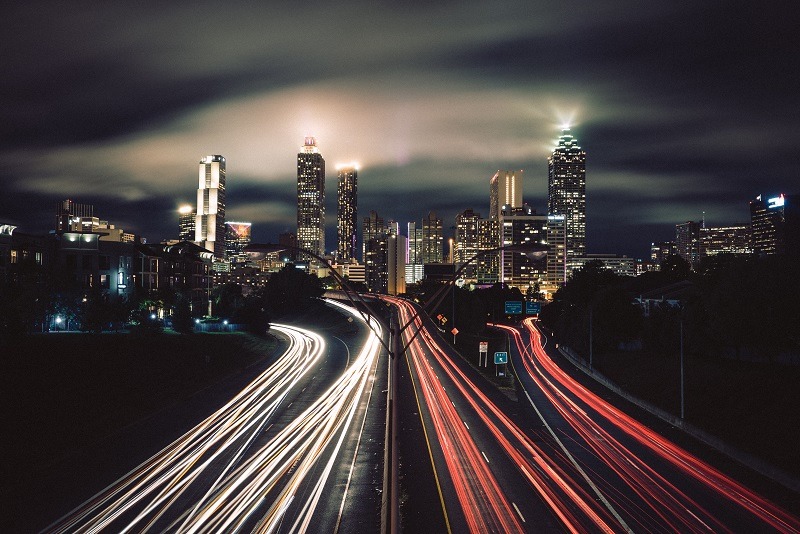
2. Using Light Trails for Urban Energy
Long exposures at night can turn moving lights—like car headlights or city traffic—into glowing trails that snake through your frame. This approach is especially effective for cityscapes and urban scenes, adding a sense of energy and flow. To achieve this effect, set your camera on a tripod, use a low ISO, and experiment with exposures from several seconds to a minute or more.
For inspiration on capturing nature in motion, explore our article on motion photography in nature, which discusses techniques for rivers, waterfalls, and wildlife.

3. Intentional Camera Movement (ICM)
Instead of keeping your camera still, try moving it deliberately during a long exposure. This technique, called intentional camera movement, can create abstract, painterly effects. Vertical or horizontal sweeps work well with trees, lights, or architectural lines. The key is to experiment with different speeds and directions to find the look you want.
4. Layering Motion with Multiple Exposures
Some cameras allow you to combine several exposures into one image. By layering shots of a moving subject, you can create a ghostly sequence that shows the path of motion. This approach works well for dancers, athletes, or animals in action. If your camera doesn’t support multiple exposures, you can achieve a similar effect through post-processing.
Compositional Techniques for Stronger Motion Photos
Beyond technical settings, how you frame and compose your shot has a big impact on the feeling of movement. Here are some composition tips to enhance your motion photography:
- Leading Lines: Use roads, rails, or rivers to guide the viewer’s eye along the direction of motion.
- Negative Space: Leave space in front of your moving subject to suggest where they’re headed, adding tension and anticipation.
- Rule of Thirds: Position your subject off-center to create a more dynamic, balanced image.
- Foreground Elements: Include stationary objects in the foreground to emphasize the contrast between stillness and movement.
Lighting also plays a crucial role in motion shots. For a deeper understanding of how light interacts with movement, visit this comprehensive guide to understanding light in photography.
Practical Tips for Better Motion Images
To get the most out of your motion compositions, keep these practical suggestions in mind:
- Plan Your Shot: Scout your location and anticipate the direction and speed of your subject.
- Use Burst Mode: Shooting in continuous mode increases your chances of capturing the perfect moment.
- Manual Focus: Pre-focus on a spot where the action will occur to avoid missed shots due to autofocus lag.
- Experiment with Angles: Try shooting from low or high perspectives to add drama and variety.
- Review and Adjust: Check your images on the spot and tweak your settings or composition as needed.
If you're interested in advanced lighting techniques for motion, our article on understanding strobe lighting explains how to freeze action with flash while maintaining ambient motion blur.
Common Mistakes and How to Avoid Them
Even experienced photographers can struggle with motion shots. Here are some pitfalls to watch out for:
- Excessive Blur: Too slow a shutter speed can make your subject unrecognizable. Test different settings to find the right balance.
- Camera Shake: Use a tripod or image stabilization to keep unwanted blur at bay.
- Cluttered Backgrounds: Busy scenes can distract from your moving subject. Simplify your composition when possible.
- Ignoring Light: Movement is affected by lighting conditions. Adjust your exposure and consider using artificial light for clarity.
FAQ
What camera settings work best for capturing motion?
The ideal settings depend on your creative goal. For sharp, frozen action, use a fast shutter speed (1/500s or faster). For intentional blur, slow your shutter to 1/30s or below. Adjust ISO and aperture to maintain proper exposure, and use burst mode for fast-moving subjects.
How can I make my motion photos more creative?
Experiment with techniques like panning, light trails, and intentional camera movement. Play with composition by using leading lines, negative space, and unique angles. Post-processing can also enhance the sense of motion by blending exposures or adding subtle effects.
Do I need special equipment for motion photography?
While a tripod and a camera with manual controls are helpful, you can start with any camera or even a smartphone. Accessories like neutral density filters allow for longer exposures in bright conditions, and external lighting can help freeze or highlight motion.
Exploring new motion composition ideas can open up fresh creative possibilities in your photography. With practice and experimentation, you'll develop your own style for capturing the energy and flow of the world in motion.